 |
| American Imperialism
During the late 19th and early 20th centuries, the United States began to develop an interest in expanding past their borders. Spanish militarism in Cuba provided the United States with an opportunity to begin this involvement in Latin American affairs. This ultimately led to the Spanish American war which provided the United States with many new acquisitions: Hawaii, Cuba, Puerto Rico, Guam, and the Philippines. Although some claimed that these actions were purely humanitarian, others argue that it was primarily out of greed and selfishness. In this political cartoon, artist Jeanine Sabbbah shines light on the ethnocentrism behind American expansionism to prove that US imperialism was driven not only by humanitarian reasons but also militaristic and economic gains.
Facial expressions are very significant in this cartoon, from the children up front squirming in horror at Uncle Sam to the Chinaman standing out of place in the doorway. Uncle Sam's condescending look as he faces the children of the islands shows how the U.S. viewed the Latin American islanders as inferior. This is relevant to the time period because many people used Social Darwinism to justify the monopoly of minorities. As seen with Cuba, Philippines, Hawaii, and Guam's faces leaning back in fright, it can be understood that the artist felt US imperialism was an aggressive policy. The use of facial expressions helped in conveying the emotional downsides of imperialism. Clothing is also a very important device that helped the artist in achieving his purpose. Uncle Sam is the most obvious displays of nationalistic clothing with his red and white striped pants and start-dotted vest. He is seen wielding a stick towards the island children who are dressed in very American, westernized clothing. This is a portrayal of the US attempting to assimilate the minority to their standards under the pretense of mentoring them, as a teacher would a student. However, in the right corner the Chinaman and Native American are donning traditional outfits. This shows how the United States pushed away the Native American and China issue, not even bothering to dress like Americans do.
This political cartoon showed US imperialism as a form of teaching and learning under the pressure of assimilating to American culture. Many people felt that because it was under the decree of Uncle Sam, it was patriotic and nationalistic to support the cause. However, artist Jeanine Sabbbah felt a need to educate Americans on a different perspective of what US imperialism truly entails. It is through her use of facial expressions and clothing in this political cartoon that she is able to shine light on the darker sides of imperialism.
|
Sunday, March 19, 2017
TOW #23 - Political Cartoon of American Imperialism

Sunday, March 12, 2017
TOW #22 - Social Contract Theory Rhetorical Text
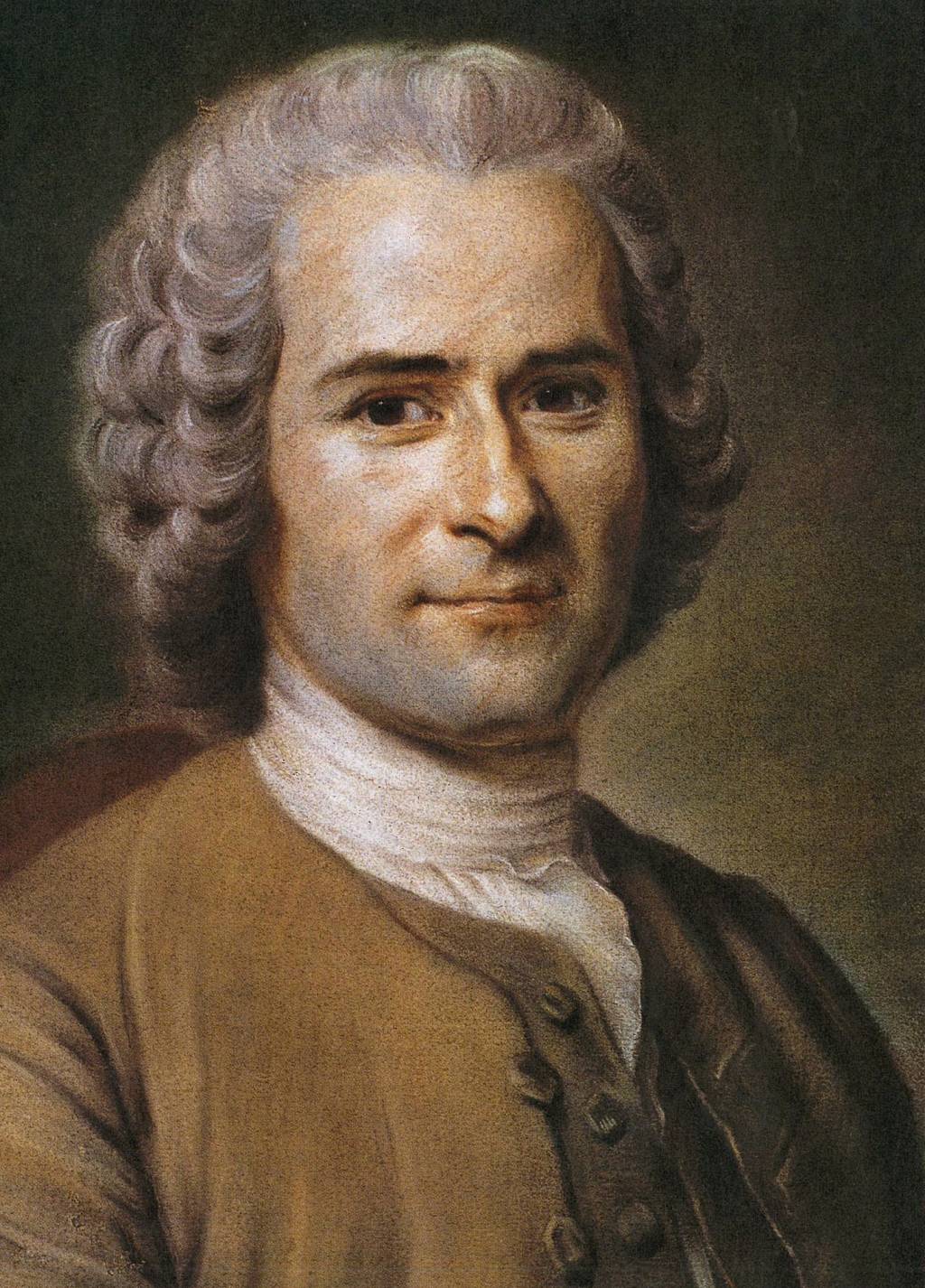 |
| Jean-Jacques Rousseau - “The Origin of Civil Society”
During the early 18th century, Jean-Jacques Rousseau and a few others lead what is now referred to as the Age of Enlightenment. He was a French philosopher who offered the world with a new perspective on society and how it is governed. His most famous philosophy is on the social contract theory and the freedom of the natural man. Rousseau effectively persuades his readers into agreement in his book "The Origin of Civil Society" through his use of comparisons and hypophoras.
Throughout his arguement, Rousseau stresses the importance of natural societal order and how most forms of society today obstruct it. In order to open up the eyes of his readers to this societal issue, he compares family to the state. He states "Children remain bound to their father for only just as long as they feel the need of him for their self-preservation. Once that need ceases the natural bond is dissolved" (59). Likewise, the natural order of society should be that people live protected my the government until they reach Independence. This give and take of paternal love is natural; However, in the state "the pleasure of commanding others takes its place, since the ruler is not in a relation of love to his people. Political power is (hardly) ever exercised in the interests of the governed" (60). Rousseau's technique of comparing family with the state was very effective, because it made it more apparent on how the two were similar; the children are like the people and the father is the head of the state. In highlighting the benefits of natural societal order and comparing it to the unnatural way of government, Rousseau persuades his audience of the benefits of the social contract theory.
In addition to comparisons, Rousseau's use of hypophoras allows him to emphasize the significance of his purpose and persuade his readers to support his social contract theory. He presents many rhetorical questions to his readers that make them see logic behind his theory. In his "Of Slavery" section, he proves that slavery is unjustifiable and inhumane. If a man wanted to become a slave to another he would be selling himself. But, an entire race of people do not spontaneously agree to such conduct. Rousseau then asks, "but why should a whole people sell themselves?" (63). This makes the reader think about the ugly truth behind slavery, as well as realize that the oppressed have their own wills as well. He also presents a very logical argument that all people, regardless of race, are born with total freedom and no one can take that away from them. The government during this time does not respect that, however with his social contract theory they would be a step closer to achieving it.
In combatting the issue of tyranny and corrupt government, Jean -Jacques Rousseau argues against the total power of the monarchy. He believes that the power to legislate lies within the people, and it is under their natural right to freedom. To convince his readers of this argument, he uses comparisons and hypophoras. To him, That a more natural way of societal order is necessary.
|
Sunday, March 5, 2017
TOW #21 - "President McKinley Gives His Reasons for Keeping the Philippines"
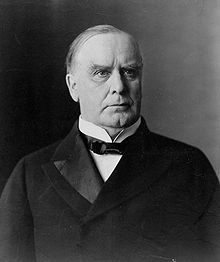 |
| President McKinley 1903
When President McKinley decided to keep the Philippines during the year 1903, a heated debate arose throughout the country. Although the concept of imperialism was something that had been often considered part of the American tradition, the conquering of the Philippines was particular in that they were not granted the liberty and freedom other islands had received. President McKinley's pro-imperialists beliefs primarily surrounded the idea that there was no alternative options because economically, diplomatically, and socially the U.S. was pushed in a corner. Realizing how sensitive and controversial the matter of the Philippines would be, he attempted to sway the public with his opinions in this speech by utilizing religious appeal and lists.
President McKinley heavily stressed the importance of helping out the natives. He makes many religious references and even goes as far as to say that after many restless days of contemplating the issue of the Philippines, God reached out to him and gave him guidance. This was a very relevant and effective way of swaying the public because many people during this time were very religious and very Christian. Henceforth, if God said it was okay to take the Philippines than it must be an honorable deed. He also makes it appear as though America was doing the Philippines a favor by attempting to uplift, educate and Christianize the natives by god’s grace. In his speech he even compares their plight of educating the natives to how "[their] fellowmen for whom Christ also died." Pro-expansionists often used this argument to justify their imperialism of the Philippines. This idea of the American godly-duty was well bought by the crowd, especially in the early days of imperialism.
President McKinley also utilized lists to make a more logical argument for imperialism. During this time period, there were several movements that fought adamantly against imperialism and questioned the extent on which they were acting for the welfare of others. McKinley likely felt that the best way to fight back against the backlash was to provide an argument, which is why he listed his reasons for keeping the Philippines. McKinley reasons that because returning the Philippines "would be bad business and discreditable" and "cowardly and dishonorable." He even mentions that they were "unfit for self-government--and they would soon have anarchy and misrule" if the Americans did not intervene. Although in current times it appears to be an absurdly egocentric thing to say, with the rise of Social Darwinism at the time it was a very valid argument that he made to his people. The idea of helping to unburden the islands and conforming them to American ideals to make them just like the Americans appealed to many, which is exactly why the Philippines were kept.
President McKinley was extremely open to his people on his contemplating over the Philippines decision. To buy public support on this severely controversial issue and provide justification for his motives and actions, he utilized religious appeals and lists. His beliefs that it was the American duty, responsibility, and even mandate from god to keep the natives is very clear in his speech.
|
Sunday, February 26, 2017
TOW #20 - IRB "Tuesdays With Morrie"
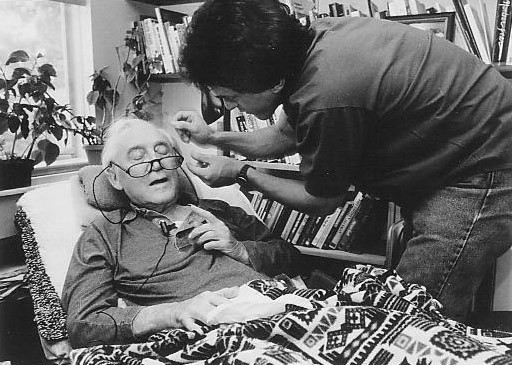 |
| Tuesdays With Morrie
For my IRB this marking period, I chose to read "Tuesdays with Morrie" by Mitch Albom. As mentioned in my earlier IRB post, this book is about a student, Mitch Albom, and his dying college professor. These two had a very close bond since Albom's college days, and in Morrie's final days they spend a lot of time together discussing about the meaning of life and its lessons. The first chapter of the book is the Curriculum-the Syllabus. In it, Albom introduces the audience to the weekly meetings he has with Morrie. Rather than describing it as a out-of-place meeting, he depicts their meetings as a continuation of his studies. The classes are held in Morrie's house. This is where we are introduced to the pink hibiscus plant, a symbol that would later come to represent life and death.
As Morrie's sickness worsens and his body deteriorates, the petals of the hibiscus plant begin to fall losing life. They wither and fall, one buy one as Morrie's dependence on his oxygen aid grows. The hibiscus plant is continuously used as a symbol for life, specifically Morrie's. It is understood that the closer Morrie approaches death, the death of the plant grows closer as well
A particularly upsetting moment so far in this book was when Albom, during one of his meetings with Morrie, recalls the summer of 1979 when he graduated. After receiving his diploma, Morrie approached him to greet his parents, describing Albom as a "very special boy." In turn, Albom presents Morrie with a tan briefcase engraved with Morrie's initials. Both men's eyes well up with tears and they promise each other to keep in touch.
Although I have just recently begun this book, I already fill greatly enraptured by it. I too have an extremely special teacher who greatly impacted my life. I feel I can relate to Albom in the ever great thanks I feel towards my teacher. This book is also extremely meaningful with beautifully sad moments. I feel very enlightened every time I open this book and am excited to continue reading.
|
Monday, February 20, 2017
TOW #19 - Visual Analysis of "We Can Do It" War Poster
 |
| "We Can Do It" |
For this week's TOW, I chose to do a rhetorical analysis of the iconic "We Can Do It" war poster. More commonly referred to as the Rosie the Riveter poster, it was designed by J. Howard Miller in 1942. He was a freelance artist from Pittsburgh who was commissioned to draw up a poster that would portray American patriotism, regardless of gender, to garner everyone's war effort. When this poster was made, the United States were in midst of World War II. As the males left to fight on the forefront, women were left behind and job positions opened up. Posters such as this one called for women to take these jobs upon themselves and prove themselves equal as men. Through the artist's use of color and portrayals of strength, he is able to effectively sell the idea of America as the home of the free and equal by conveying to his audience that women are just as necessary to the war effort during this time.
The color scheme of this poster is very iconic and practically blares out American patriotism: blue, white, and red. As America was fighting a war during this time period, any and all public support was necessary. A movement of sorts began to bring in women into the workforce to help the nation. The bright blue shirt, red and white headband are very patriotic articles of clothing. It appeals to the audience of primary women and make the workforce and war effort an appealing thing. Despite fashion of this time consisting primarily of dresses and/or skirts, Rosie is seen wearing a blue-collared shirt; a motif of the working class. Hankerchiefs were not something that women used as sweatbands, but Rosie proved that women do not have to be held down by fashion standards either. Ads such as Rosie the Riveter were very successful in appealing to women and encouraging them to step out of the norm.
Physical attributes of Rosie are also key in portraying an uncommon perspective of the potential of women. Her iconic pose of flexing her arm shows the audience her muscles, which aren't overly muscular, but enough to show strength. Her facial expression is also stern and bit aggressive, showing conviction and power. Both her facial expression and her curling of her arm were out of expectations of women as dainty beings. Instead, it challenged societal expectations and showed that there are other alternatives for women. Put all together, Rosie appears to be a very hard-working woman. It conveys to the audience that women are strong enough and capable enough of men's jobs.
Artist J. Howard Miller did a brilliant job in illustrating a women of the workforce, especially given the time period. Rosie the Riveter would soon become an iconic image for women's rights, challenging societal norms from various different angles. It is through advertisements such as these that women were encouraged to join the workforce, and America was able to expand upon their ideology of equality and gain support for the war.
Tuesday, February 7, 2017
IRB Intro Post #3 - Tuesdays with Morrie

Sunday, February 5, 2017
TOW #17 - Trump's Immigration Ban
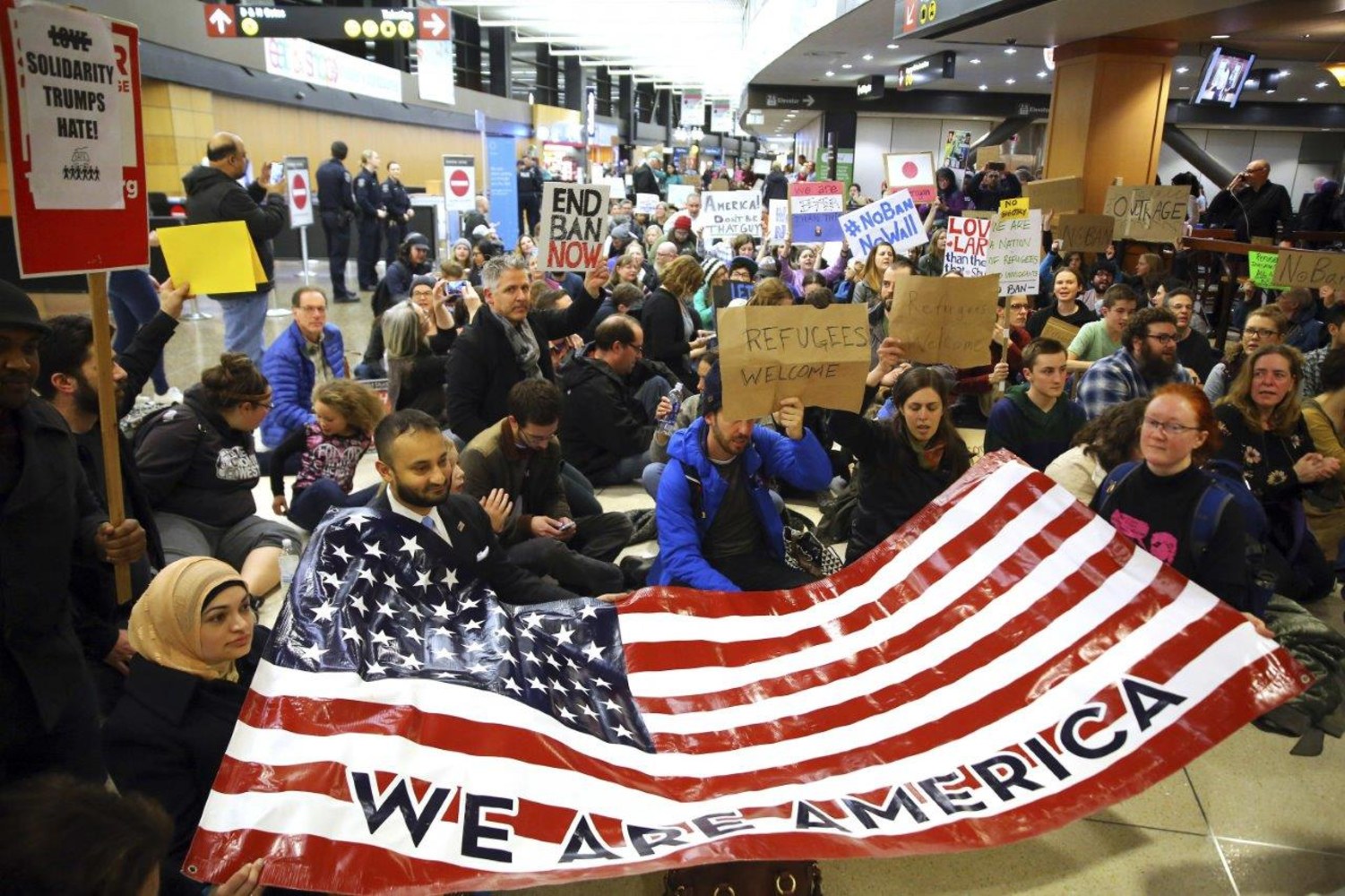 |
| Protests at Airport against Trump's Immigration Ban |
This photo was taken just hours after the federal judge passed President Trump's 'temporary ban' on immigration. This ban affected immigrants from seven countries where Islam is the national religion: Iraq, Iran, Syria, Somalia, Sudan, Yemen, Libya. Immediately following this decision where loads and loads of protests, most notable the campaigns against the ban at airports around the country. As depicted in the photograph, hundreds of people from all races, genders, age, ethnicities are protesting at the the airport. I felt strongly that the photographer well captured the facial expressions and diversity at this particular protest and effectively demonstrated the rejection of the people against President Trump's executive order restricting refugees.
At first glance, the disdain on each and every one of the people's faces is obvious. What makes this image particularly effective are the people sadly gazing at the American flag. It sends a more powerful message of upset and disappointedness towards America as a whole. The words "We are America" are crumpled up in the folds of the flag, and the protesters can only hope that they can make a change. This ban prevents even those with green cards from coming back into the country after leaving the U.S.. Refugees from Syria run the risk of being banned indefinitely. However the protesters clearly believe that these actions are not what America is about. Banning immigration is not American, protesting for what is right is. On top of facial expressions, the photographer focused on an extremely diverse section of the protests at the airport. By doing so, the artist is able to strengthen the image of America as a strong nation of diverse people and not just one character. The picture works as a proof of defiance as well as a symbol for unity and strength. The true America welcomes people with open arms and will not quietly allow such injustice to unravel.
Trump's immigration ban has raised many eyebrows and heightened tensions between many people. Some immigrants have gotten lucky with being able to remain in the states with a green card. Unfortunately, for some their luck is limited and have had to lose family members to the law. Many stories have come about on families who have become separeted because of the law. Fortunately, with people like these protesters standing up for equality, America can remain strong and defiant in the face of injustice.
Subscribe to:
Posts (Atom)